
Introduction
Ransomware, cloud outages, aging hardware, human error, regional storms. Any one of these can knock a business offline for hours or days.
In its 2026 Data Breach Investigations Report, Verizon found ransomware present in 48% of breaches analyzed over the prior year. Prevention alone isn't a strategy anymore.
Recovery readiness matters just as much. The Uptime Institute's 2024 Annual Outage Analysis found that 54% of organizations surveyed said their most recent serious outage cost more than $100,000.
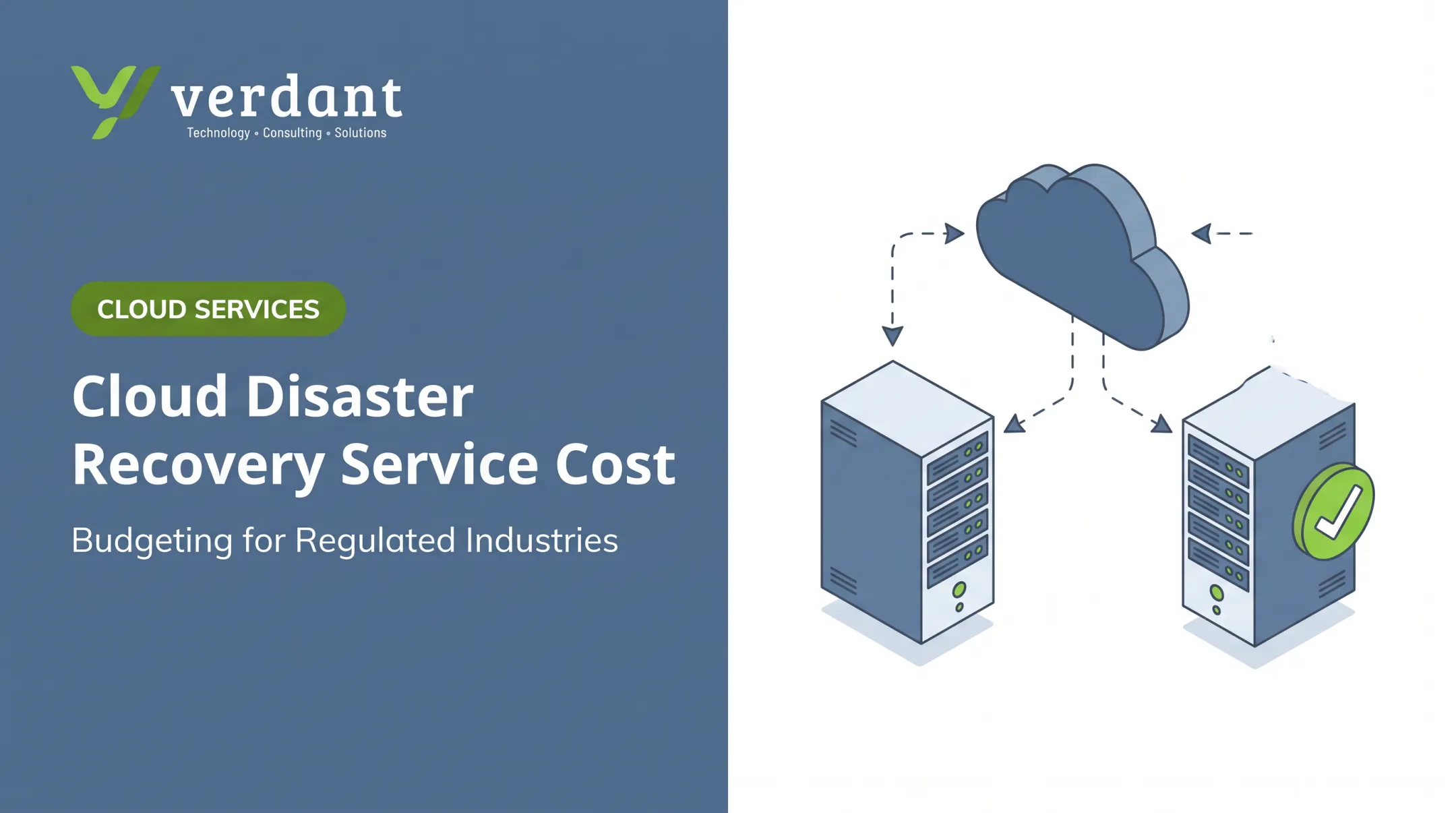
Disaster Recovery as a Service (DRaaS) gives businesses access to replicated infrastructure, applications, and data without the expense of building a duplicate data center. This guide compares five leading DRaaS providers in the US market. It breaks down how to evaluate RTOs, RPOs, SLAs, security, testing, and pricing before you sign anything.
Key Takeaways
- Expect DRaaS to replicate critical workloads and fail over to a recovery environment when production systems go down.
- Match providers to your workload types, recovery objectives, compliance needs, and internal IT capacity.
- Prioritize tested recovery performance over advertised recovery times.
- Confirm whether you get backup only, a full failover environment, or fully managed recovery support.
Overview of Disaster Recovery as a Service in the US Market
How DRaaS Actually Works
DRaaS follows a consistent pattern regardless of vendor:
- Identify critical workloads — servers, applications, and data that must survive an outage.
- Replicate continuously to a secondary environment, often in the cloud.
- Monitor recovery readiness through regular health checks and test failovers.
- Initiate failover when a disaster is declared, bringing systems online at the recovery site.
- Operate from recovery until the primary environment is restored.
- Complete failback, moving workloads back to production.
RTO and RPO, in Plain Terms
Two metrics drive every DR conversation. The National Institute of Standards and Technology defines Recovery Time Objective as the maximum time a system can remain down before it hurts the business. Recovery Point Objective is how much data loss you can tolerate, measured in time.
A customer-facing e-commerce app might need an RTO of minutes and an RPO of seconds. An internal archive that nobody touches daily can often tolerate an RTO of hours and an RPO of a full day.
DRaaS Isn't Just Backup
This distinction trips up a lot of buyers. Backup preserves copies of your data — useful, but not enough on its own.
DRaaS is built to restore usable infrastructure: servers, networking, applications, and data, together, so operations can actually continue. A backup without a recovery plan is just an insurance policy nobody knows how to file a claim on.

Common US Use Cases
- Ransomware recovery — restoring from a clean, isolated point before encryption hit.
- Aging on-premises servers — covering systems nearing end-of-life with no built-in redundancy.
- Hybrid and multi-cloud environments — maintaining consistent recovery across platforms.
- Compliance-driven requirements — meeting obligations in finance, healthcare, and other regulated industries.
- SMBs without a dedicated DR team — outsourcing testing and orchestration to a partner.
The five providers below solve these problems differently. Some are cloud infrastructure platforms; others are software delivered through a managed partner. Treat them as different categories of solutions, not interchangeable products. Verify current 2026 pricing and SLA terms directly with each vendor.
Best Disaster Recovery as a Service Providers in the US in 2026
This shortlist was evaluated for workload coverage, recovery orchestration, RTO/RPO flexibility, security, testing capability, and support model. These are editorial comparisons based on public documentation, not universal endorsements. The right fit depends on your existing infrastructure and internal capability.
AWS Elastic Disaster Recovery
AWS Elastic Disaster Recovery (AWS DRS) replicates on-premises or cloud servers into AWS using continuous block-level replication and an installed agent. It creates crash-consistent recovery points and launches EC2 instances during failover, with reverse replication supporting failback to the original or a new source.
This service suits organizations already running AWS workloads or comfortable managing cloud-native recovery. Traffic redirection (like DNS cutover) stays a customer responsibility, and application dependency mapping takes real internal expertise.
Comparison snapshot:
- Delivery model: Self-managed cloud DR platform; recovers into AWS regions.
- RTO/RPO: AWS documents typical RTOs of 5–20 minutes and RPOs measured in seconds, based on network and staging capacity. These figures are not a contractual guarantee.
- Pricing: Charged per actively replicated server on an hourly basis; EC2 and EBS usage adds cost during testing and recovery.
- Best for: AWS-centric organizations with in-house cloud engineering capacity.
Microsoft Azure Site Recovery
Azure Site Recovery (ASR) replicates Azure VMs, on-premises Hyper-V and VMware VMs, and physical Windows/Linux servers.
Microsoft's documentation covers supported operating systems and known limitations. Storage Spaces Direct is crash-consistent only, and iSCSI isn't supported in certain scenarios, so review the current support matrix before you commit.
Recovery plans group machines (up to seven groups) and sequence startup order with pre- and post-action scripting. Test failover runs in an isolated network without disrupting production replication or ongoing operations.
Comparison snapshot:
- Delivery model: Native Azure service for hybrid and Azure-to-Azure recovery.
- RTO/RPO: Configurable through recovery plans; actual performance depends on workload dependencies and network bandwidth.
- Pricing: Billed per protected instance, with the first 31 days free; storage, transactions, and egress add cost.
- Best for: Microsoft-centric organizations already running Windows Server, Microsoft 365, or hybrid Azure infrastructure.
IBM Cloud Disaster Recovery and Resiliency Services
IBM splits its DR capability into two distinct tracks. IBM Cloud publishes service-specific business continuity and disaster recovery documentation for products like Kubernetes, OpenShift, and Cloud Databases. Separately, IBM offers managed resiliency consulting and disaster recovery services for organizations that want planning, implementation, and ongoing operations handled by IBM staff.
Don't confuse the two. Self-service IBM Cloud capabilities are not the same contract, SLA, or support tier as a managed IBM resiliency engagement.
Comparison snapshot:
- Delivery model: Either self-managed IBM Cloud service DR features or fully managed resiliency services. Confirm which one you're buying.
- RTO/RPO: Varies by specific IBM Cloud service or negotiated managed contract; no universal figure applies.
- Pricing: Contract-based for managed services; consumption-based for self-service Cloud capabilities.
- Best for: Regulated enterprises and complex hybrid environments wanting consulting support alongside infrastructure.
Veeam-Powered DRaaS Providers
Veeam is data protection software delivered by cloud and managed service partners as branded DRaaS offerings. Veeam Cloud Connect supports multi-tenant, partner-delivered backup and DR, with orchestration, immutable storage, and clean-recovery tools like Secure Restore for testing backups in isolation before a real restore.
Because Veeam is delivered through partners, the SLA, geography, support hours, and shared-responsibility split all come from the individual provider, not from Veeam directly. Get those terms in writing before you sign.
Comparison snapshot:
- Delivery model: Software ecosystem delivered through a service-provider partner, not a single standardized offering.
- RTO/RPO: Set by the partner's infrastructure and contract, not by Veeam software alone.
- Pricing: Determined by the partner — typically subscription-based with storage and retention tiers.
- Best for: Organizations that want ransomware-resilient backup with orchestrated recovery, delivered by a trusted local or regional partner.
Rubrik
Rubrik focuses on cloud-native, on-premises, SaaS, and unstructured data protection, with cyber-recovery features layered on top. Its threat monitoring scans backups for indicators of compromise using threat intelligence and flags suspicious activity early.
Cyber-recovery tools clone backups into an isolated environment for validation and support mass VM recovery with a documented last-known-clean snapshot.
Rubrik is strongest as policy-driven data protection with strong ransomware readiness. Treat it as distinct from a fully managed operational DR service unless you pair it with a specific managed offering.
Comparison snapshot:
- Delivery model: Platform-based data protection, often paired with a partner for full DRaaS delivery.
- RTO/RPO: Depends on the specific deployment and secondary-site design; not a single published figure.
- Pricing: Platform licensing plus storage; managed service costs vary by partner.
- Best for: Organizations prioritizing centralized, policy-driven protection with strong ransomware detection and clean recovery validation.

How We Chose the Best DRaaS Providers
We built this list by reviewing official 2026 product documentation, SLA terms, pricing pages, and support commitments for each provider. Where current information wasn't publicly available, we labeled it as such rather than guessing.
We prioritized recovery capability over raw backup capacity:
- Clear RTO/RPO definitions by workload type
- Documented failover and failback procedures
- Dependency-aware orchestration across multi-tier applications
- Evidence of regular recovery testing, not just backup verification
Security and compliance also mattered:
- Immutable or isolated recovery copies
- Encryption, identity controls, and geographic redundancy
- Relevant certifications like SOC 2 and ISO 27001, verified for the specific service, not the vendor's brand as a whole
Attackers often go after backups first. Ransomware operators frequently locate and disable backup systems before encrypting production data. Keeping recovery infrastructure separate from your primary environment is no longer optional.
On the commercial side, we compared:
- Subscription, storage, replication, and compute charges
- Testing, support, and disaster-activation fees
- Who owns each part of the process: customer, cloud provider, software vendor, or managed partner
Common mistakes we flagged for readers:
- Choosing the cheapest storage tier without checking recovery performance
- Accepting an SLA without ever testing it
- Overlooking application dependencies during failover planning
- Ignoring cloud egress or standby compute costs until the invoice arrives
- Assuming backups alone equal business continuity

Conclusion
The best DRaaS provider is the one that protects your critical workloads, meets realistic recovery objectives, satisfies compliance obligations, and proves it through repeatable testing.
Before you sign a contract:
- Request a workload assessment.
- Review the shared-responsibility model line by line.
- Test recovery, not just backup, before committing to a long-term contract.
- Calculate the full cost of downtime against standby infrastructure, data transfer, storage, and support.
If you need help assessing disaster recovery readiness, planning a cloud migration, or aligning managed IT and cybersecurity support, Verdant TCS can review your environment and recovery requirements with you directly.
Frequently Asked Questions
How much does disaster recovery cost?
Costs vary based on protected workloads, data volume, replication frequency, standby compute, and RTO/RPO targets. Testing, support, and compliance requirements add further variables. Request a workload-based quote rather than comparing sticker prices.
What is disaster recovery as a service?
DRaaS is a cloud-delivered service that replicates critical systems and data, then helps restore operations through a dedicated recovery environment after an outage or disaster.
What is a good disaster recovery plan for businesses?
A solid plan covers business impact analysis, dependency mapping, prioritized workloads, RTO/RPO targets, defined roles, communication procedures, vendor contacts, and regular testing with documented updates.
When would a disaster recovery plan (DRP) be activated?
A disaster recovery plan activates when an incident threatens the availability, integrity, or recoverability of critical systems and meets predefined escalation criteria.
What is the difference between a DRP and a BCP?
A disaster recovery plan focuses on restoring technology, data, and infrastructure. A business continuity plan covers how essential business functions keep running before, during, and after a disruption.
What are some popular disaster recovery platforms?
Common options include AWS Elastic Disaster Recovery, Microsoft Azure Site Recovery, IBM's recovery services, Veeam-powered partner offerings, and Rubrik. Suitability depends on your workload types, cloud environment, and required service model.